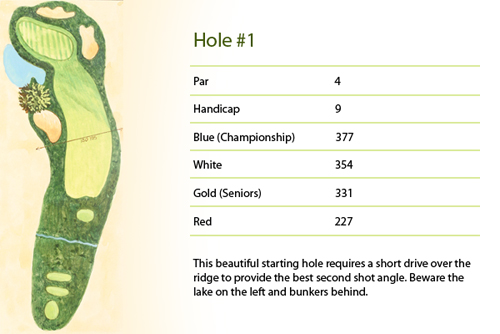
Hole 1
- Blue
- 377 yards
- White
- 354 yards
- Gold
- 331 yards
- Red
- 227 yards
This beautiful starting hole requires a short drive over the ridge to provide the best second shot angle. Beware the lake on the left and bunkers behind.
The Course
The original hole paintings and notes for all eighteen holes at Mill Quarter.
Every hole was painted in watercolor in 2004 by Virginia artist John Obolewicz, whose signature appears on the 18th. John was a longtime member of the Mill Quarter Golf Association and painted the course often over the years, so he knew these holes as a player as well as an artist. A three-time winner of the Virginia State Duck Stamp, he is known for his landscapes, wildlife and sporting art.
This beautiful starting hole requires a short drive over the ridge to provide the best second shot angle. Beware the lake on the left and bunkers behind.
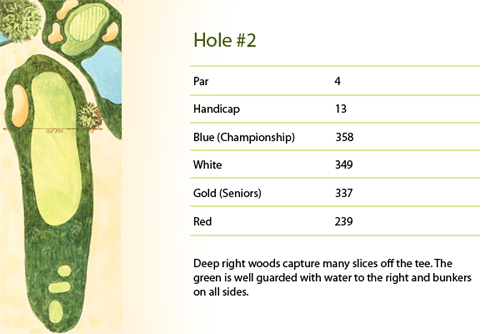
Deep right woods capture many slices off the tee. The green is well guarded with water to the right and bunkers on all sides.
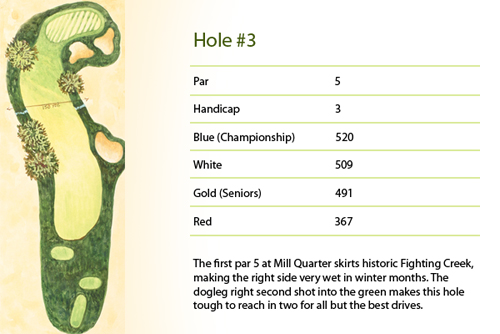
The first par 5 at Mill Quarter skirts historic Fighting Creek, making the right side very wet in winter months. The dogleg right second shot into the green makes this hole tough to reach in two for all but the best drives.
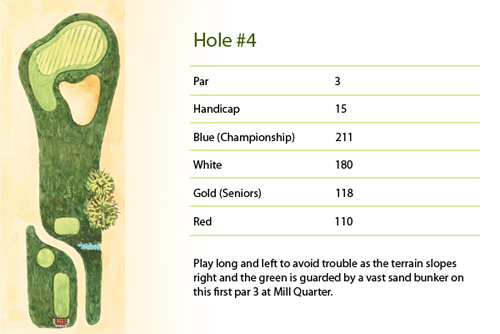
Play long and left to avoid trouble as the terrain slopes right and the green is guarded by a vast sand bunker on this first par 3 at Mill Quarter.
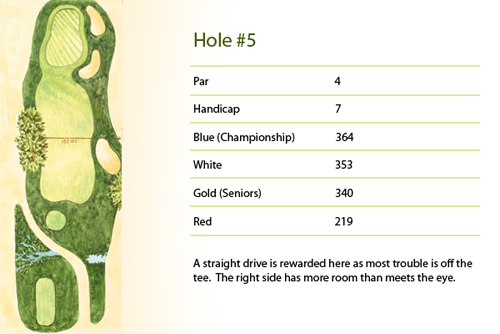
A straight drive is rewarded here as most trouble is off the tee. The right side has more room than meets the eye.
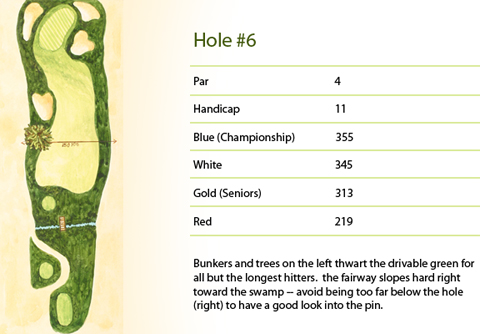
Bunkers and trees on the left thwart the drivable green for all but the longest hitters. The fairway slopes hard right toward the swamp. Avoid being too far below the hole (right) to have a good look into the pin.
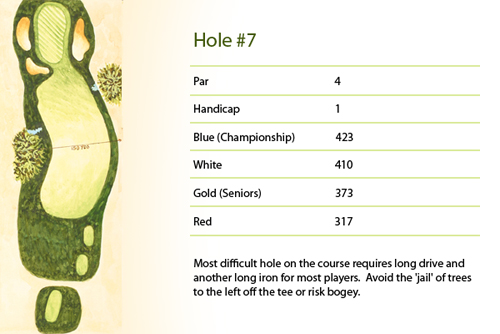
The most difficult hole on the course requires a long drive and another long iron for most players. Avoid the 'jail' of trees to the left off the tee or risk bogey.
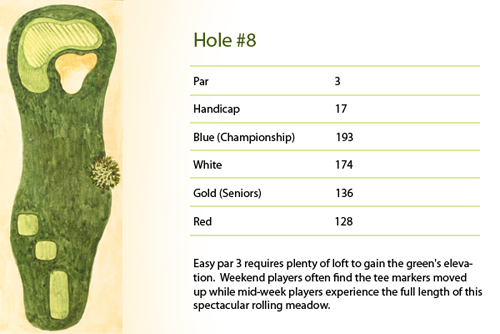
An easy par 3 that requires plenty of loft to gain the green's elevation. Weekend players often found the tee markers moved up, while mid-week players experienced the full length of this spectacular rolling meadow.
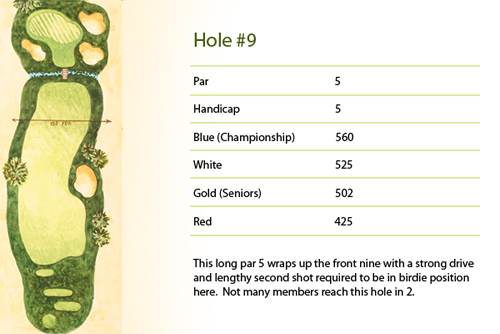
This long par 5 wraps up the front nine with a strong drive and lengthy second shot required to be in birdie position. Not many members reached this hole in two.
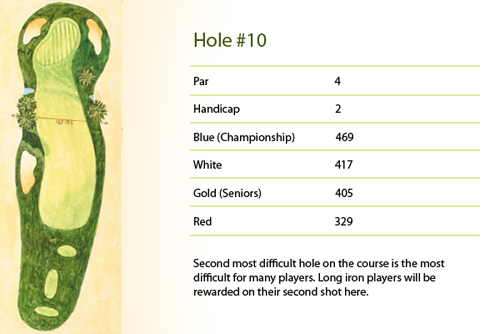
The second most difficult hole on the course, and the most difficult for many players. Long iron players are rewarded on their second shot here.
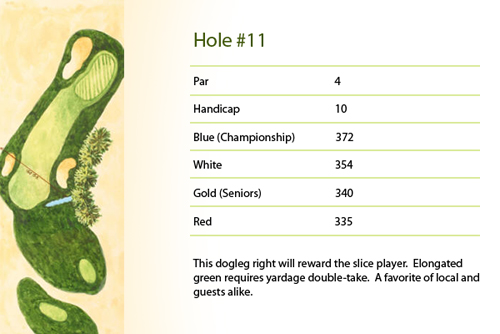
This dogleg right rewards the slice player. The elongated green requires a yardage double-take. A favorite of locals and guests alike.
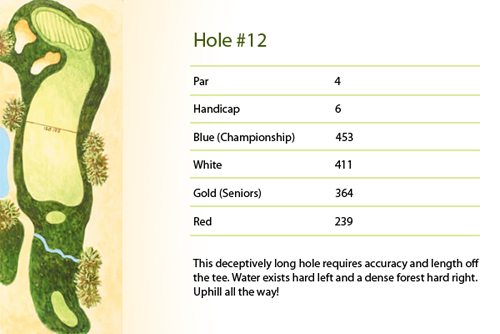
This deceptively long hole requires accuracy and length off the tee. Water hard left and a dense forest hard right. Uphill all the way!
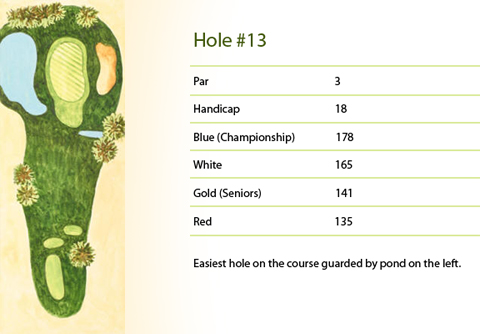
The easiest hole on the course, guarded by a pond on the left.
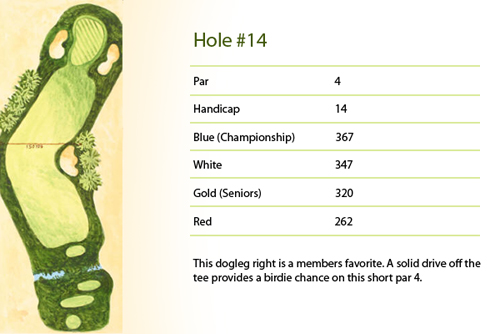
This dogleg right is a members’ favorite. A solid drive off the tee provides a birdie chance on this short par 4.
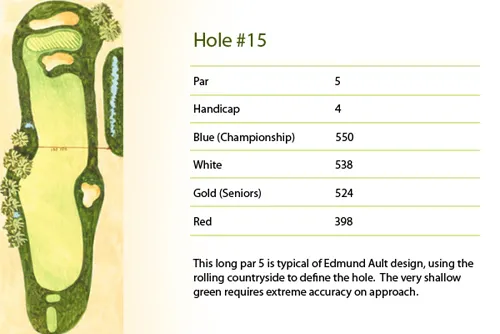
This long par 5 is typical of Edmund Ault design, using the rolling countryside to define the hole. The very shallow green requires extreme accuracy on approach.
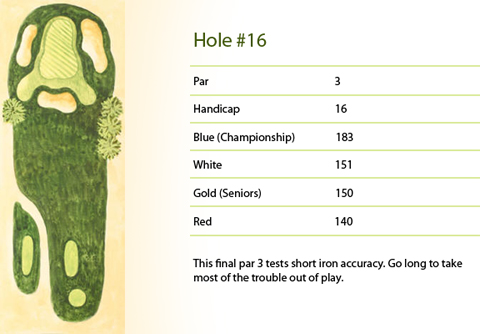
The final par 3 tests short iron accuracy. Go long to take most of the trouble out of play.
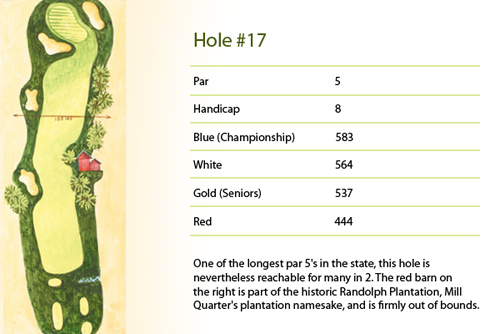
One of the longest par 5s in the state, yet reachable in two for many. The red barn on the right is part of the historic Randolph Plantation, Mill Quarter’s namesake, and is firmly out of bounds.
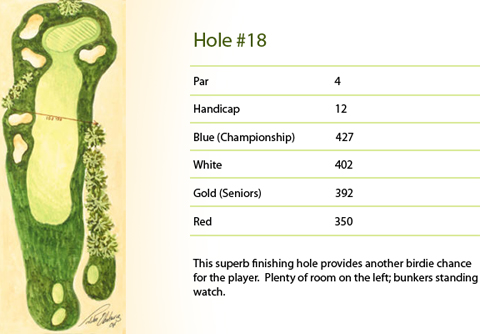
This superb finishing hole provides another birdie chance. Plenty of room on the left, with bunkers standing watch.